Tasmanian Cave Spider
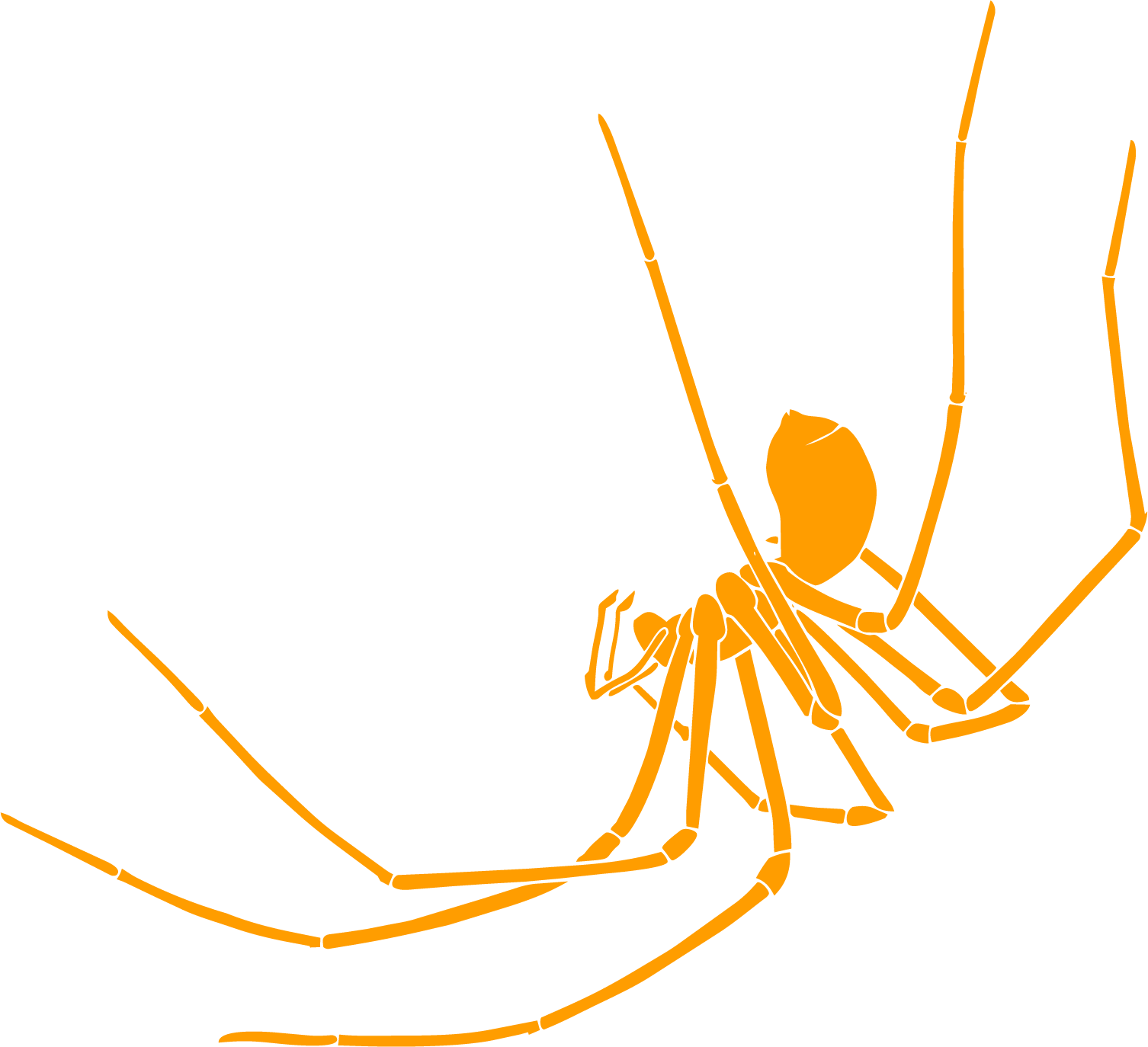
Meet the Tasmanian Cave Spider.
This interesting spider lives only in Tasmania. While also found in dark and damp places outside of caves, such as hollows in rainforest trees and old mining or railway tunnels, Tasmania's caves are the main home of the Tasmanian cave spider.
Our knowledge of the Tasmanian cave spider has progressively grown since it was first documented by scientists in the 1880s. It has had its current scientific name Hickmania troglodytes since 1958, being named Hickmania for Professor Vernon Hickman (a prominent spider researcher) and troglodytes, Greek for 'cave-dweller'.
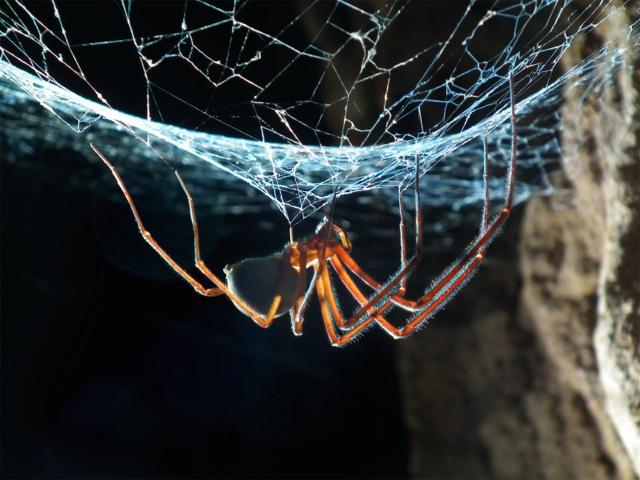
The large-size can be unnerving for cave visitors.
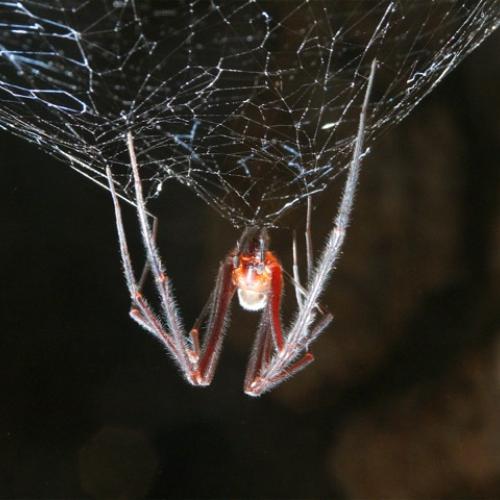
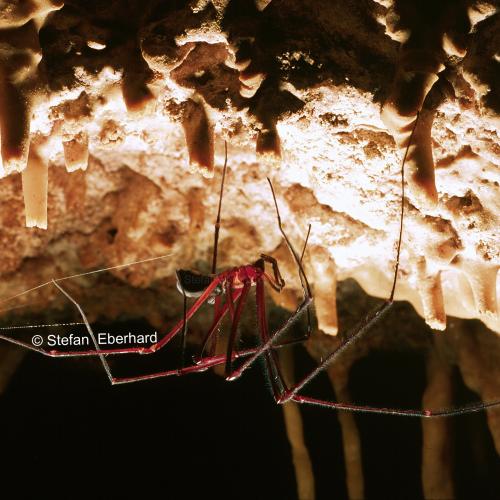
Visitors to the magnificent Marakoopa Cave and the Hastings Caves in Tasmania are generally unnerved when told of the size of Tasmanian cave spiders; while the body is just two centimetres in length, the leg-span can be up to 18 centimetres. People are not used to spiders of these proportions! Thankfully the cave guides can reassure visitors that cave spiders are not aggressive or harmful to humans.
The Cave Spider catches its food in an escape-proof web.
Not always lucky are smaller cave animals such as crickets, beetles, millipedes and spiders which can become prey. The Tasmanian cave spider spins a horizontal sheet-web, up to a metre across, which traps small cave animals that fall, fly or jump into it. There's no escape and a trapped animal becomes hopelessly entangled with any effort to free itself. The Tasmania cave spider moves beneath the web to eat its prey.
Tasmanian Cave Spiders spend more time in the egg sac than the entire life cycle of many other species of spiders.
The mating of the male and female Tasmanian cave spiders can last for hours. The male has a kink-like structure on his second pair of legs, and this is used to ‘pin' the female Tasmanian cave spider in place for mating; he is vulnerable when mating as she could eat him if she were free to move.
The female builds a beautiful egg sac, made of tightly-woven silk, that is about four centimetres high and about two centimetres across. This is suspended from a thread in a sheltered area in the cave. Inside the egg sac, the eggs develop in an 'interior sac' that is separated from the external sac. Scientists have described this as 'Thermos-like' as there is an insulated area between the interior and exterior walls that protects the eggs and young spiderlings from changes in the outside temperature.
The spiderlings emerge from the egg sac about eight to ten months after the eggs are laid. This is much longer than the usual four to eight weeks for spider eggs to hatch. Tasmanian cave spiders are thought to live for many years, very unusual for spiders.
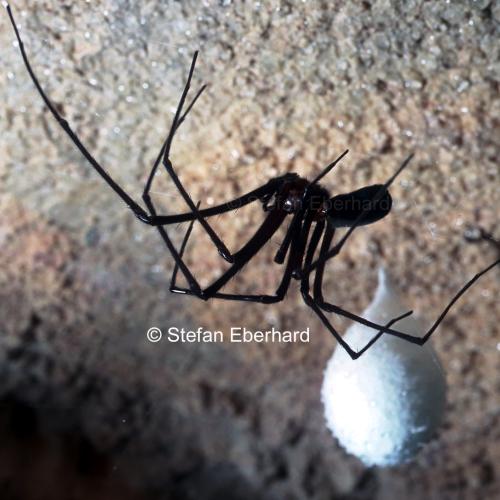
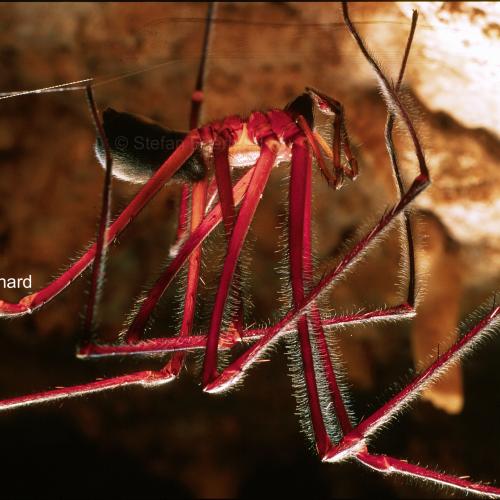
The silk eggs sacs could give us clues to new medications for humans.
Walk, or crawl, into a cave and any piece of organic matter will be covered in mould or fungi. Tree branches that fall into a cave rot rapidly. Bread crumbs accidentally dropped by cavers eating their lunch quickly sprout mould. The faecal droppings of mammals such as wombats, rats and possums are readily-covered with long-lengths of fungi.
But, the egg sac of a Tasmanian cave spider remains 'clean' and free of fungal growth and mould, and shows no sign of decomposing, even long-after the young spiders have left the egg sac and it sits abandoned in the cave. The egg sac has an anti-fungal property that scientists hope to learn more about.
Could the Tasmanian cave spider hold answers for the hard-to-treat fungal conditions that human can suffer from?
Truly, cave animals are remarkable creatures and that is why we are keen that more people learn more about them.
Like all wildlife habitat, caves need our care.
Caves are not isolated underground sanctuaries. They are intricately linked to the surface world and anything that degrades the above-ground environment also degrades the caves. Human activities such as rubbish dumping, water pollution and land clearing all impact on the health of the underground, and likewise the habitat of cave animals.
References and Further Reading:
- The biology of Hickmania troglodytes, the Tasmanian Cave Spider
N. E. Doran,' A. M. M. Richardson^ and R. Swain' 'Zoology Department, University of Tasmania, G.P.O. Box 252-05, Hobart, Tasmania 7001. Published in The Other 99%. The Conservation and Biodiversity of Invertebrates Editedd by Winston Ponder and Daniel Lunney, 1999. Pp. 330-32 Transactions of the Royal Zoological Society of New South Wales, Mosman 2088. - Bookend Trust
- The Australian Museum
- The Underground World of Spiders, Australian Geographic
Joanne Khan, May 2017