Australian cave crickets

Why the fuss about cave animals?
People marvel at the beauty of caves. But show people a photo of a small creature with long limbs and long antennae and they will generally wince. They may even declare an intent to squash the animal to death! Hidden away in caves are small, often strange-looking animals who have adapted to living in a world of blackness. There are many species of animals that live in caves, and the Australian Cave Animal program seeks to increase awareness of these fascinating animals and the importance of caves as their homes.
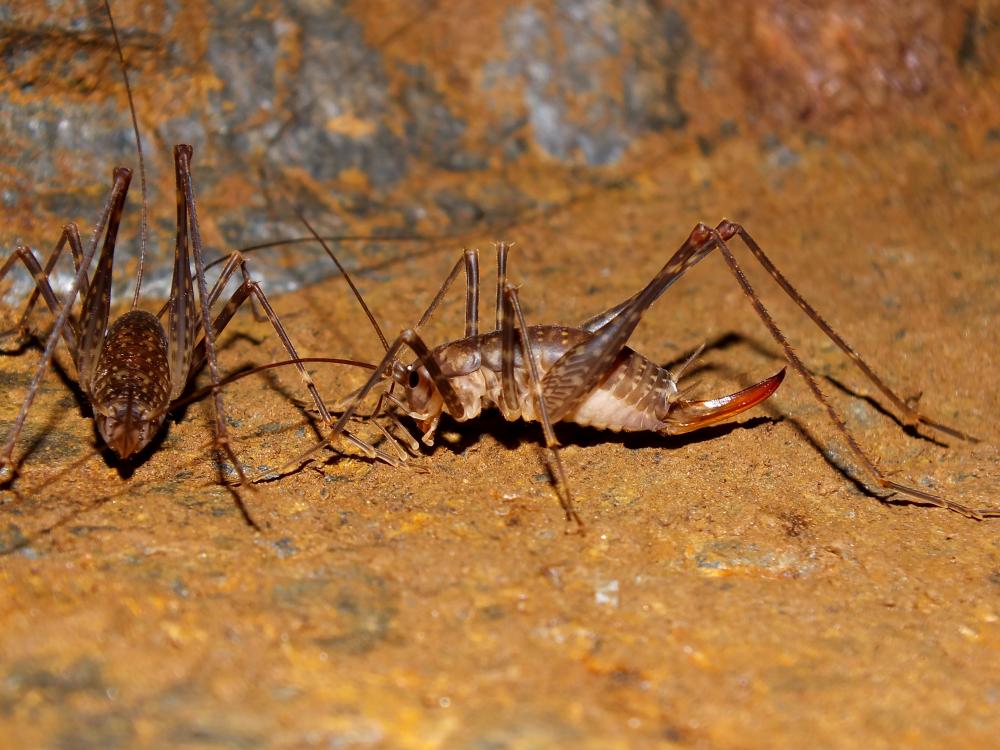
Getting to know our Australian cave crickets.
There are 22 described species of Australian cave crickets, closely related, but 22 different species. Australian cave crickets have an extensive family tree with eight genera within the Australian Rhaphidophoridae family (pronounced Rap-hid-o-phor-idea). This ancient family originated before the break-up of the old super-continent of Gondwana.
Australian cave crickets are wingless insects and can be found in limestone, larva and granite caves in both moist and dry areas. They can often be seen in the entrance areas to caves. Be sure to ask your guide about them if you are on a tour at one of Australia’s amazing public show cave sites.
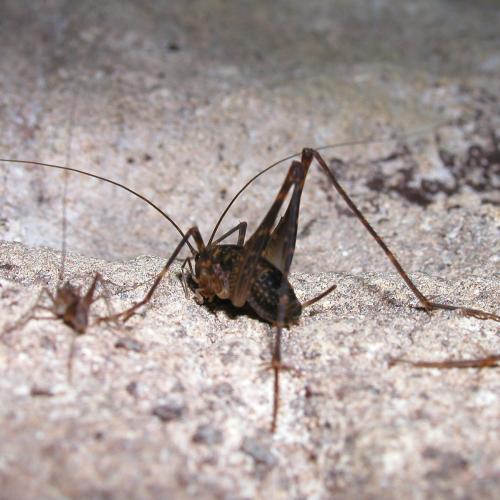
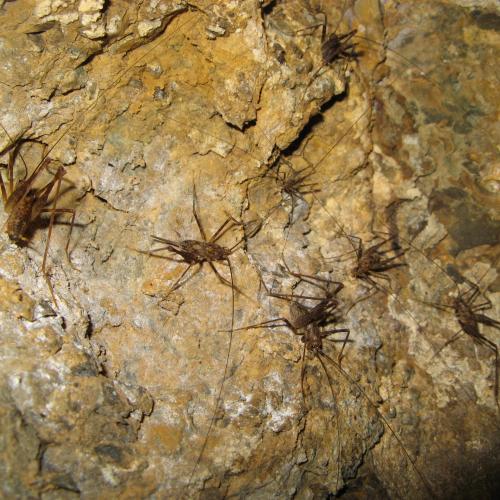
Getting to know our cave crickets.
Antennae which can be more than twice the length of their bodies are the most notable feature when looking at a cave cricket. These long and very elegant-looking antennae allow cave crickets to detect food, potential mates and predators by sense.
Cave crickets typically respond to perceived predators by jumping towards them. A cave cricket’s jump is akin to a dog’s bark or a lion’s roar. It might not intimidate a human being in a cave, but it might put off a predator that might otherwise snatch the cave cricket for a meal.
The cave cricket’s long hind legs enable jumping and assist with scrambling over uneven cave surfaces.
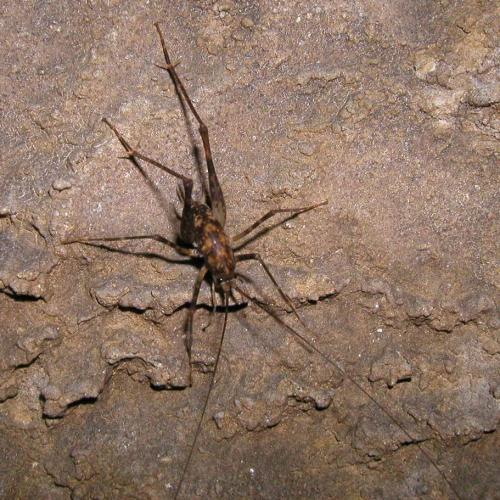
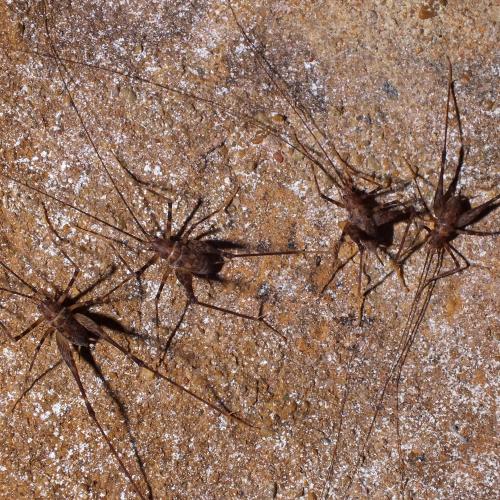
Crickets eat both plants and animals, and perhaps even their own leg!
Food is limited in the cave environment and cave crickets can’t be too fussy about their diet. Their menu includes plant material and animals both alive and dead, including injured cave crickets. They generally leave the cave at night to forage for food in the above-ground environment. Cave crickets store protein in their hind legs and, if food is scarce, they may eat one of their own hind legs. (They may also sacrifice a hind leg to evade predation by another animal. Survival is key.)
By feeding outside the cave, they bring energy into the cave and cave crickets are described as a ‘keystone’ species for life in the cave, especially in caves without resident bats. Both the crickets themselves, as prey for other species, and their waste become part of the cave food-chain.
Teeth for digging with?
Female cave crickets have a structure called an ovipositor between their hind legs and deposit their fertile eggs from this. The eggs are the size and shape of a grain of rice, and a single egg is deposited into a small hole dug into the cave substrate. The ovipositor may have up to seven small ‘teeth’ and with these the female can dig her ovipositor into the rocky cave substrate to deposit her egg.
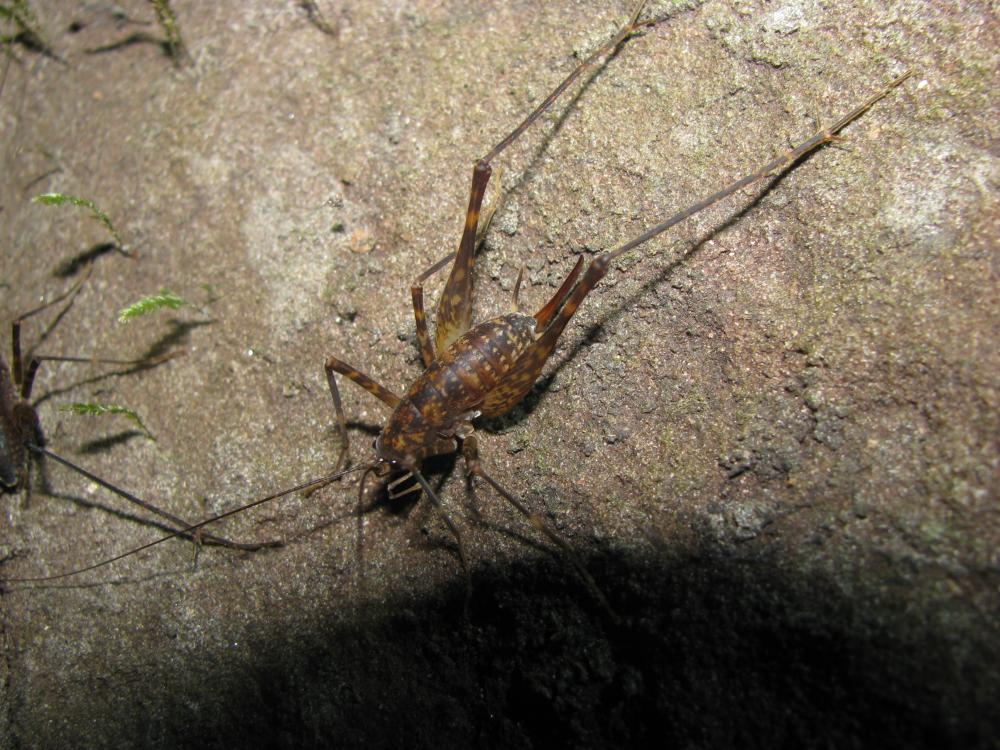
Cave Crickets don’t chirp.
Other types of crickets might chirp, but cave crickets do not and cannot. Non-cave male crickets chirp because it's a mating call, to attract a female. They do this by rubbing their wings together. But cave crickets do not have wings and are deaf. Instead, male cave crickets use abdominal vibrations to signal to females in courtship.